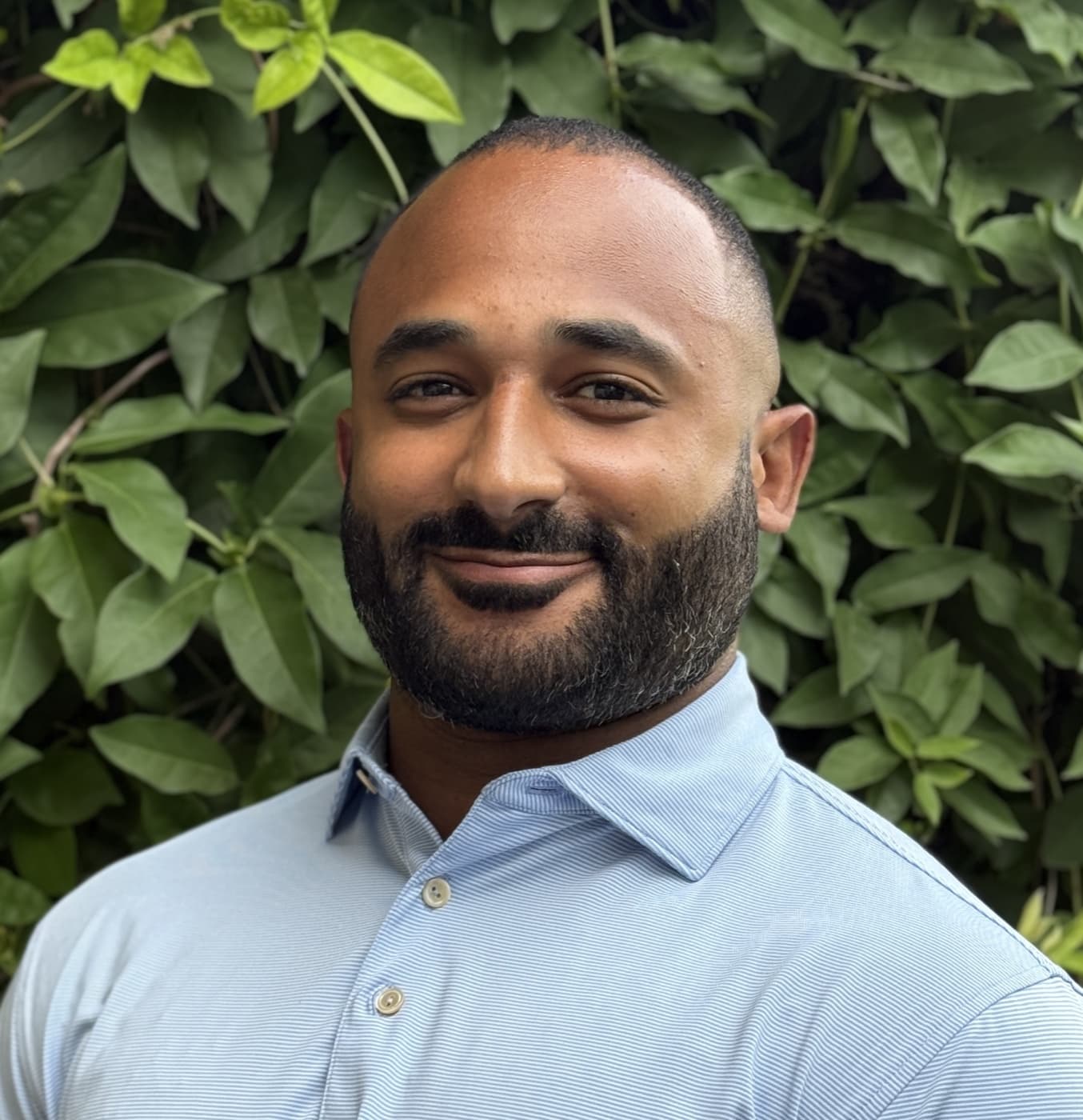
MC
AI Engineer / Software Engineer

AI engineer building trustworthy forecasting systems.

Bridging the gap between research and production. I build AI systems that are accurate, interpretable, and engineered for the real world. TS/SCI active.

Scroll

About Me

Applied AI with engineering discipline

Research depth with a production mindset.

My journey began in high-stakes environments aboard Air Force 2, where reliability wasn't optional—it was the mission. I brought that same discipline to software engineering at USAA and now to my research in hydrological forecasting.

Today, I focus on time-series AI that works in the wild. My senior thesis achieved a 26–54% error reduction in national water forecasts using hybrid architectures. I value systems that are leakage-safe, reproducible, and verifiable.

Timeline

SWE InternMay 2025 - August 2025

USAA

  • Designed and implemented GraphQL APIs using Java and Spring Boot to surface core customer data.
  • Enhanced internal troubleshooting tools by integrating Non-Source-of-Record data.
  • Built and refined JavaScript front-end components for data visualization.
  • Collaborated in an Agile/Scrum team using Jira and Git.
Executive Missions AviatorAugust 2020 - April 2023

United States Air Force

  • Maintained passenger safety and schedule reliability for distinguished guests aboard Air Force 2.
  • Responsible for mission planning and communication with the White House.
  • Managed logistics, billing, and visa applications for crew and passengers.

Core Values

The principles that guide my work.

Reliability First

Metrics must reflect operational reality. Models should remain stable even when data shifts.

Interpretability

We need to know *why* a model fails. I build systems that reveal their reasoning, not just their results.

Real-World Impact

Research shouldn't stay in a notebook. I aim for improvements that drive actual decisions.

Engineering Discipline

Pipelines, monitoring, and clear interfaces are as critical as the model architecture itself.

Featured Project

Honors Thesis

Hydra Temporal

Improving National Streamflow Forecasts (Honors Thesis)

National water models often struggle with local precision, leaving communities with uncertain flood warnings. Achieved 26–54% RMSE reduction over baselines, directly improving decision support for water management.

  • 26–54% reduction in prediction error (RMSE) on held-out basins.
  • Consistent improvement across varying forecast horizons.
  • Demonstrated stability under seasonal distribution shifts.
PyTorchTransformerHydraMLflow
NWM Forecasts
ERA5 Reanalysis
Hybrid Transformer Head
Temporal Attention Mechanism
RMSE Reduction
Performance Gain
54%

USAA Risk Services

Secure Production APIs for Financial Services

Problem

Internal teams needed a reliable, compliant way to access core risk data without navigating legacy complexity.

Why it matters

Accelerated developer velocity and ensured compliance for partner teams across the organization.

Approach

  • Designed and deployed strict GraphQL APIs using Java and Spring Boot.
  • Enhanced internal observability tools by unifying disparate data sources.
  • Built responsive React dashboards to give stakeholders visibility into risk metrics.

Stack

JavaSpring BootGraphQLReactTypeScriptPostgreSQL

Results

  • Streamlined data access for business partners, reducing support tickets.
  • Increased deployment confidence through automated testing pipelines.

What I learned

  • Clear interfaces (API contracts) allow teams to move fast safely.

Research

Senior Honors Thesis: Runoff Forecasting with Deep Learning

Post-processing operational streamflow forecasts with Hybrid Transformer/RNN models to improve accuracy while respecting physical constraints.

Architecture Design

  • Inputs: Operational NWM forecasts, meteorological forcings, static attributes.
  • Encoder: Transformer capturing multi-scale temporal context.
  • Integration: Fusing physical model outputs with deep learning corrections.
  • Pipeline: Automated feature normalization and leakage-safe splitting.

Constraints & Evaluation

  • Metrics: RMSE, NSE, KGE (Hydrology-standard metrics).
  • Validation: Spatial holdouts to test generalization.
  • Diagnostics: Analyzing error distributions across seasons.
  • Must run within operational latency limits.
  • Robustness to missing sensor data.

Reproducibility First

Research meant to be built upon. Every experiment is tracked and versioned.

Config-driven experiments (Hydra) with fixed seeds.
Strict data versioning and artifact tracking.
Full environment captures for every run.

Let's build something reliable.

Always open to discussing time-series forecasting, production ML systems, or new opportunities.

© 2026 Mitchel Carson. Built with Next.js & Tailwind.