About
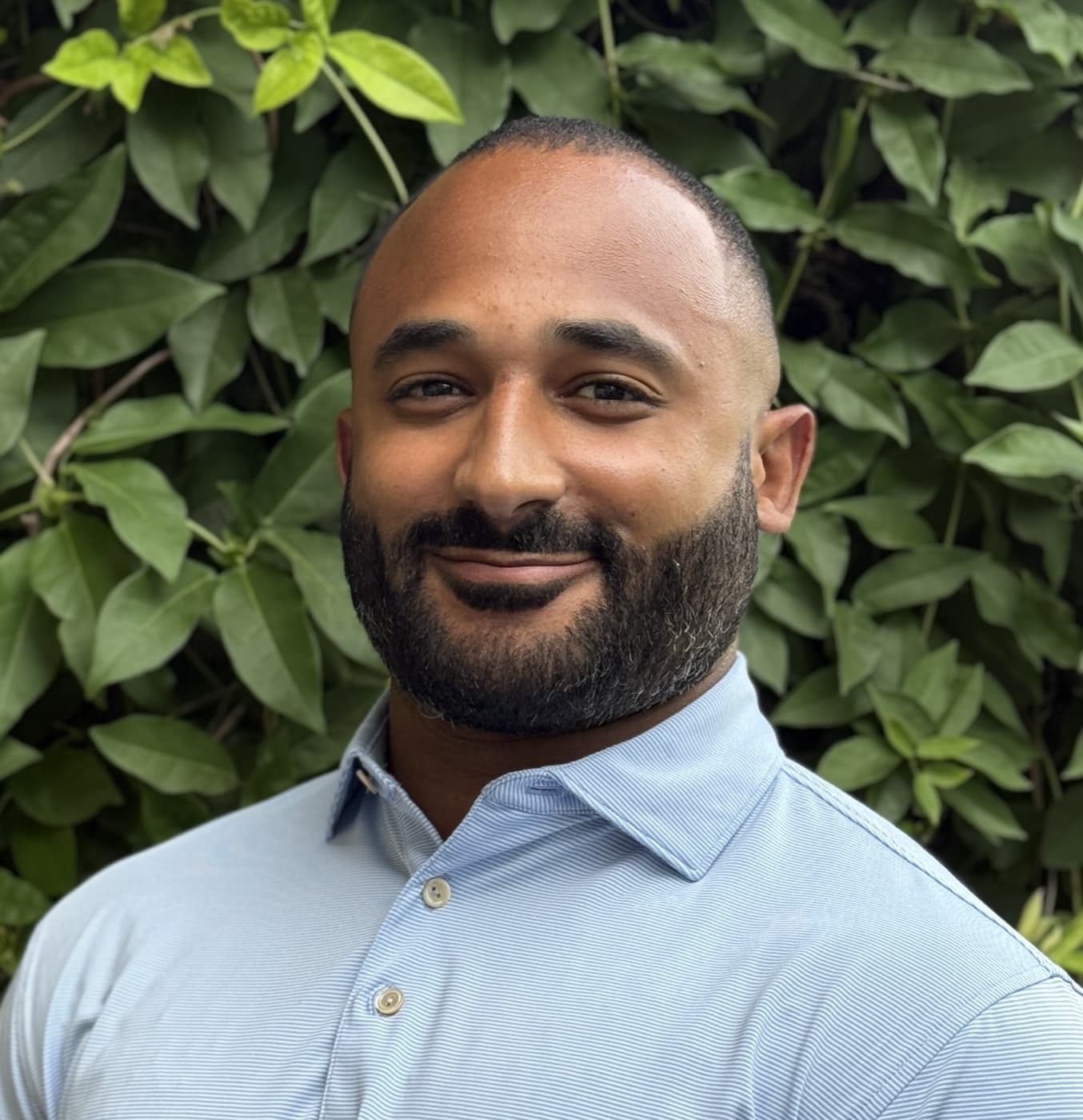
From Air Force Two to applied AI.
I decided to pursue AI while serving on Air Force executive airlift missions. This is the longer version of how I got from there to forecasting research.
Background
How I got here
Aboard Air Force Two and other executive missions, I coordinated passenger safety, logistics, and service with flight crews, security teams, and White House staff. Preparation and clear communication still shape how I build software.
After the Air Force I studied computer science at Appalachian State. I was in Boone when Hurricane Helene hit, and my senior honors thesis on runoff forecasting grew into HYDRA, the watershed-forecasting research I still work on.
Along the way I interned at USAA, building GraphQL APIs on an enterprise team, and I’m now completing an M.S. in Artificial Intelligence at UT Austin. My work spans forecasting research, production software, and client websites.
Service
What the job was
Onboard with senior leaders
Worked directly onboard with distinguished visitors, including the Vice President aboard Air Force Two and the Secretary of State.
Safety and logistics
Managed passenger safety and logistics with flight crews, security teams, and White House staff.
Mission administration
Handled in-flight meal and beverage service, baggage logistics, crew hotel bookings and ground transportation, visa applications, and crew and passenger subsistence billing.
What I carried into engineering
01
Preparation is the job.
A mission was planned long before anyone boarded, down to the hotels, the visas, and the in-flight service. I build research the same way: data manifests, configuration, and leakage checks settled before a model trains.
02
Communicate up, down, and across.
I worked alongside flight crews, security teams, and White House staff. Now it is product owners, engineers, and scientists, and the habit is the same: say what is known, what is not, and what happens next.
03
The standard does not move.
Every mission had to go right, so the bar never changed with the day. I hold my own work to it: evaluation that matches how forecasts are really used, and no result published before the analysis supports it.
Values
What I care about
Evaluation under forecast-time constraints
I design models and pipelines teammates can trust, with clear metrics, careful evaluation, and predictable behavior when inputs change.
Reproducible by default
Configs, seeds, data manifests, and tracked runs ship with the result, not after it.
Limits made visible
Good systems make uncertainty, limits, and failure modes visible.
Focus
Focus areas
AreasWatershed forecasting and forecast reliability · Sequence models: LSTM, Transformer, GRU–Transformer, Mamba2–Transformer · Leakage-aware evaluation by lead time · Bounded LLM autonomy in decision systems · Cloud research compute: Google Cloud, AWS · Production software and APIs